Experience the Castle’s History
Entry tickets
You can purchase entry tickets at the museum’s reception upon arrival.
Ticket pricesMuseum

Collection manager:
Vinko Kovač
Trainee curator
vinko@trakoscan.hr
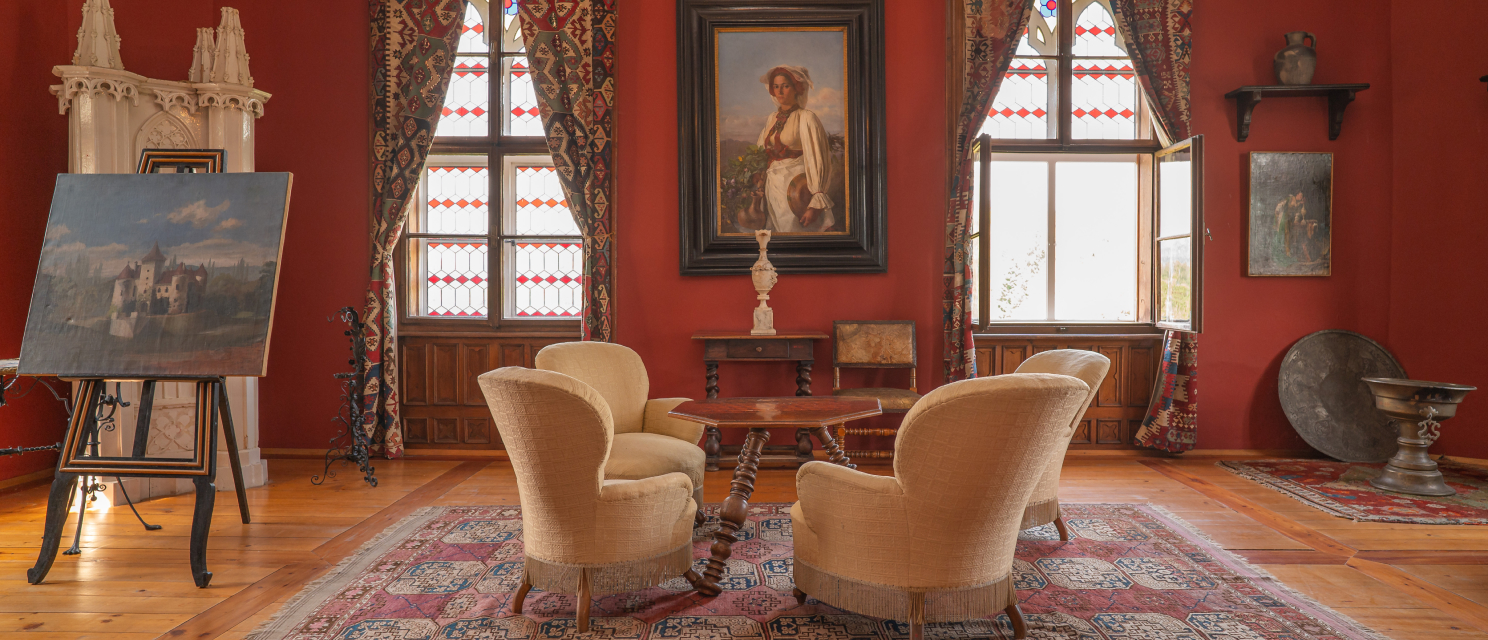
The Varia Collection consists of everyday objects that do not belong to other collections by their purpose. It is diverse in content and includes lamps, candlesticks, clocks, masonry heaters, keys, wallpaper, curtains, as well as other miscellaneous objects created in the period from the 16th to the 20th century. Most of the objects are exhibited in the permanent exhibition and are part of the ambience.
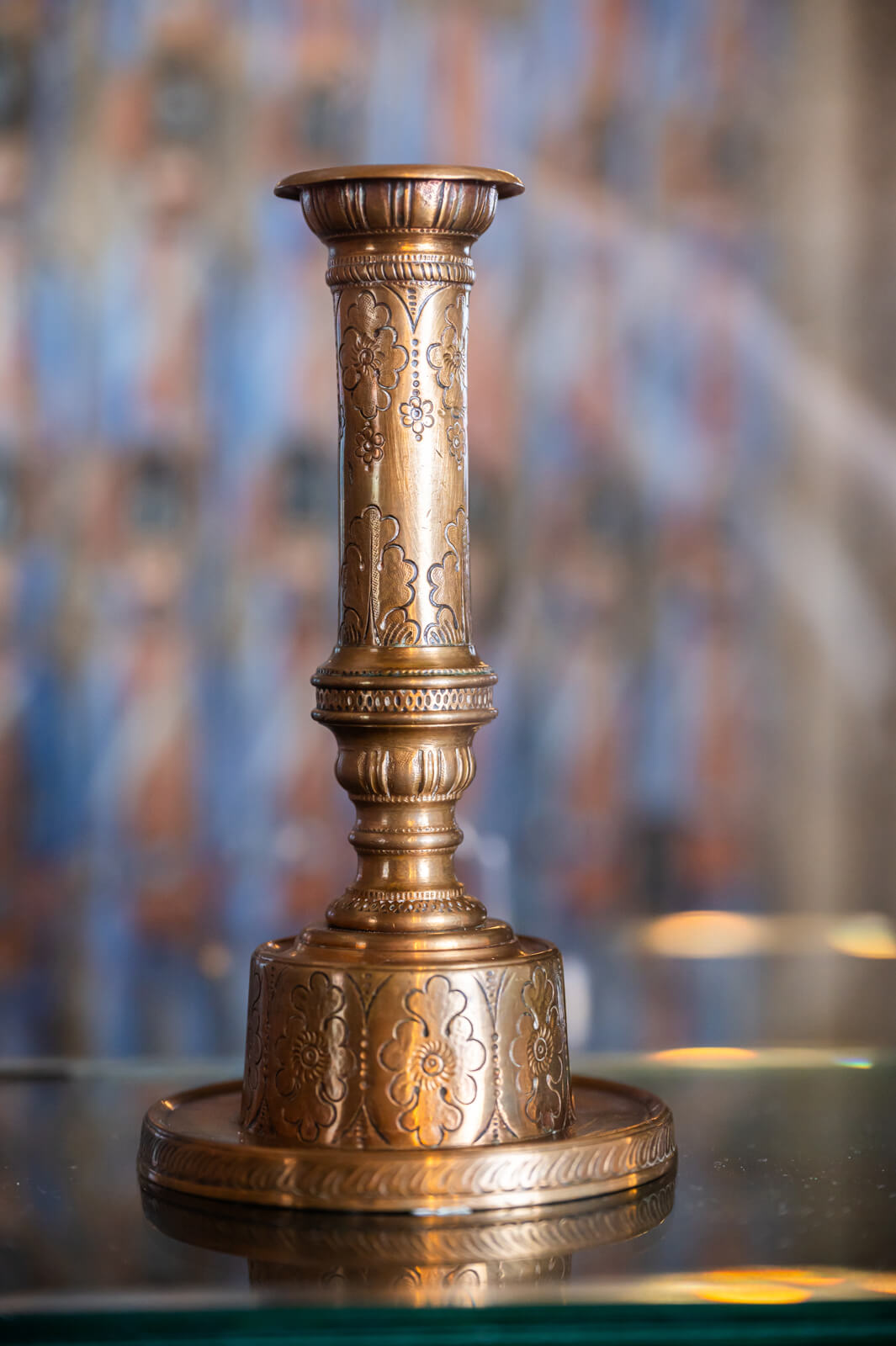
The collection is dominated by various examples of lighting fixtures: brass candlesticks, ceramic candlesticks from the Loket Porcelain Factory (Elbogen) and the L. Schutz Factory, paraffin lamps from the renowned Viennese factory R. Ditmar from the late 19th and first half of the 20th century and the Jakob Hirschhorn factory from Berlin, and stylish hanging lamps from the 17th, 18th and 19th centuries.
A special group of objects are house clocks and clock cases. One of the two preserved brass table clocks with a support from the first half of the 18th century bears the signature of the master clockmaker Johann Michael Weltz from Eisenstadt on the dial. The Classicist table clock made in the last quarter of the 18th century is a fine example of a so-called “tabernacle clock.” An unusual clock with a double dial is the work of Varaždin clockmaker Josef Bechel from the 19th century. One of the clock’s dials is located in the courtyard wall, and the other is in the hallway of the first floor of the castle.
The richly ornamented masonry heaters attract attention. The heater from the Music Room is the oldest, dating from the 18th century. In the central part of the castle’s kitchen, a large masonry heater from 1917 has been preserved and completely restored with all its details, including the metal and cast-iron fittings.
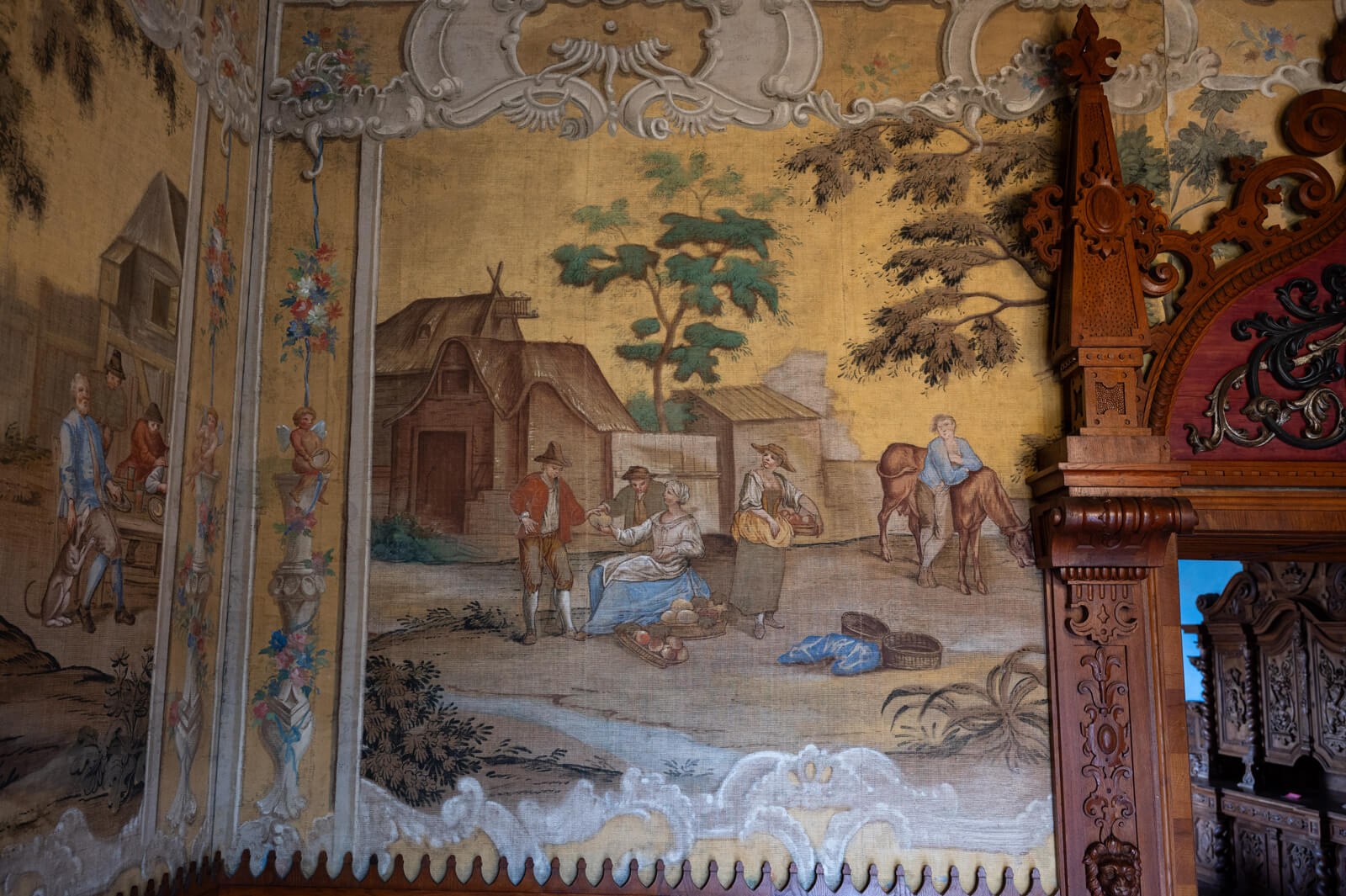
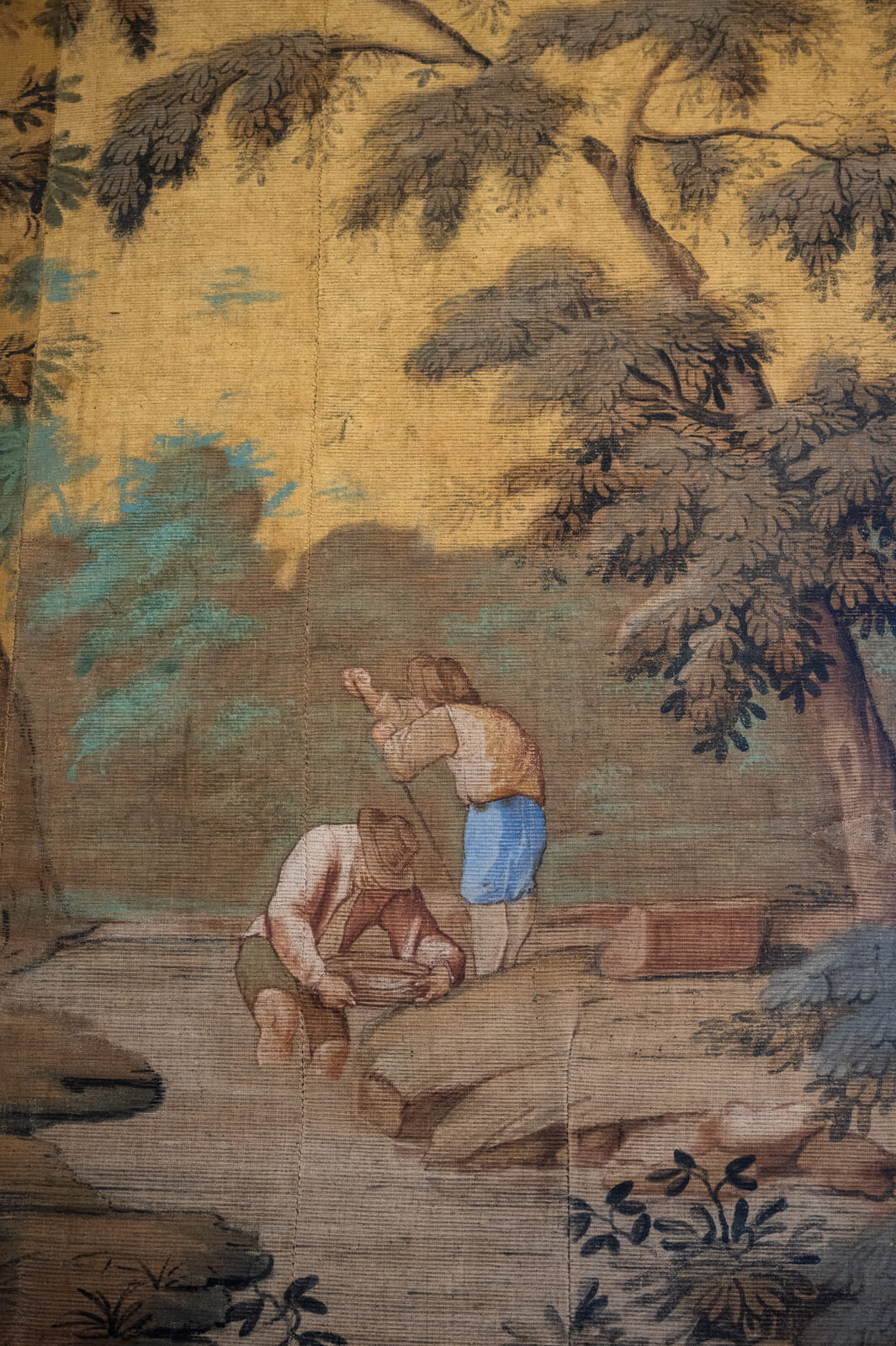
The collection also contains painted canvas tapestries by unknown authors. The painted wall canvases of the Small Salon depict the idyll of 18th-century country life, modelled on French tapestries and gobelins of the time, while the painted tapestries from the officers’ room depict regular Austrian infantry and cavalry units from the period after the War of the Austrian Succession (1740-1748). These wallpapers were probably commissioned by Josip Kazimir Drašković, who commanded one of the units depicted on them.
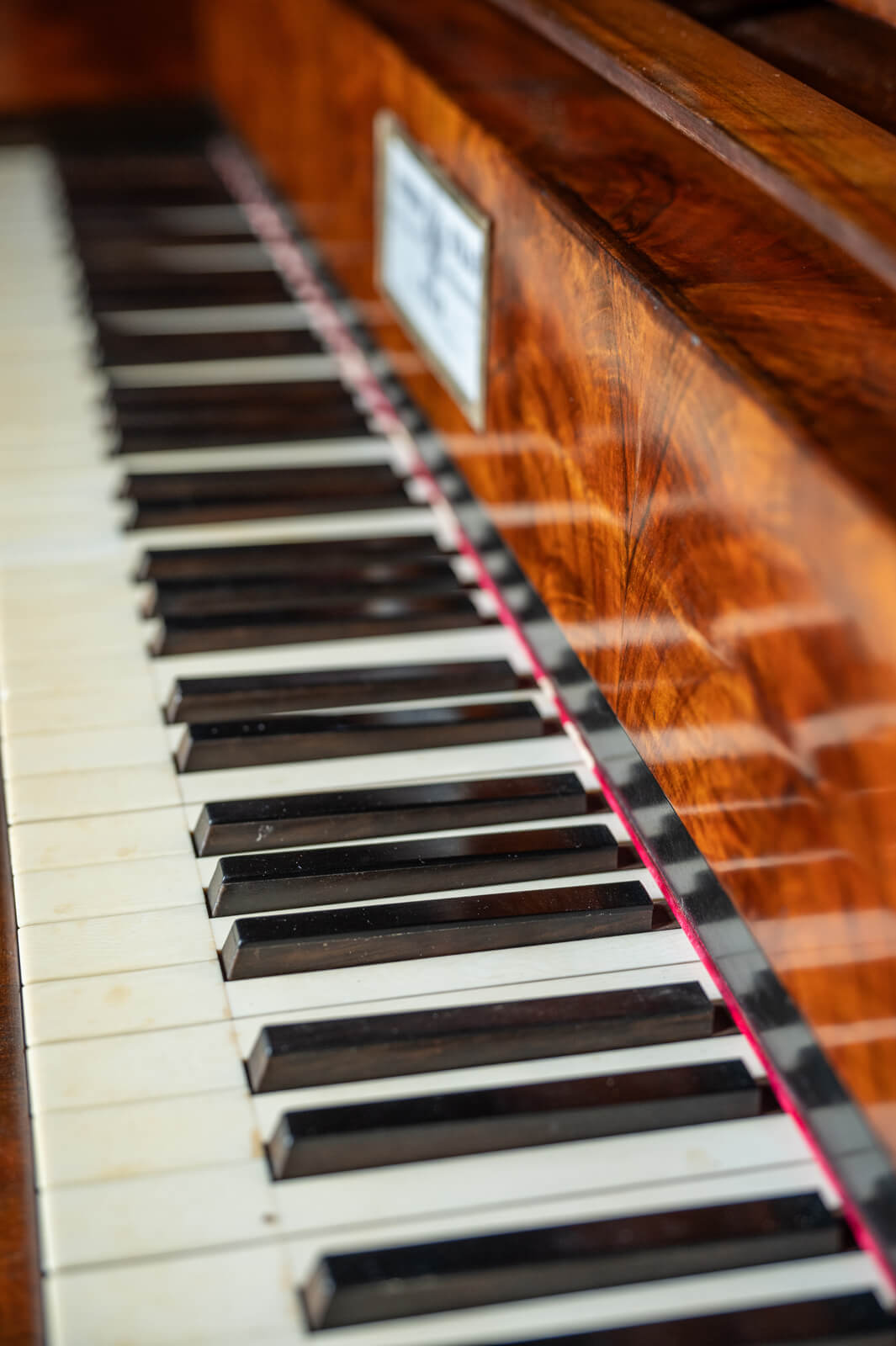
A prominent place in the collection belongs to the historic piano built by Conrad Graf (Vienna, 1835). It is rare and considered unique since it has undergone almost no modifications over time and was restored to a playing condition in 2007 by Prof Ljubomir Gašparović. One segment of the collection consists of archaeological objects from the legacy of the Drašković family: polished axes and hammers from the Neolithic Age (6000-3500 BC) and clay vessels from the Late Bronze Age (1100-850 BC). A smaller section also includes various items of a sacred nature related to the Roman Catholic faith and rites: chalices, bells, a monstrance, oil lamps, an aspergillum, an incense burner and sacred sculptures. In the Chapel of the Holy Cross in the gardens, there is an altar with Late Classical features and a choir screen railing with painted Late Baroque panels depicting saints.
Experience the Castle’s History
You can purchase entry tickets at the museum’s reception upon arrival.
Ticket prices