Experience the Castle’s History
Entry tickets
You can purchase entry tickets at the museum’s reception upon arrival.
Ticket pricesMuseum
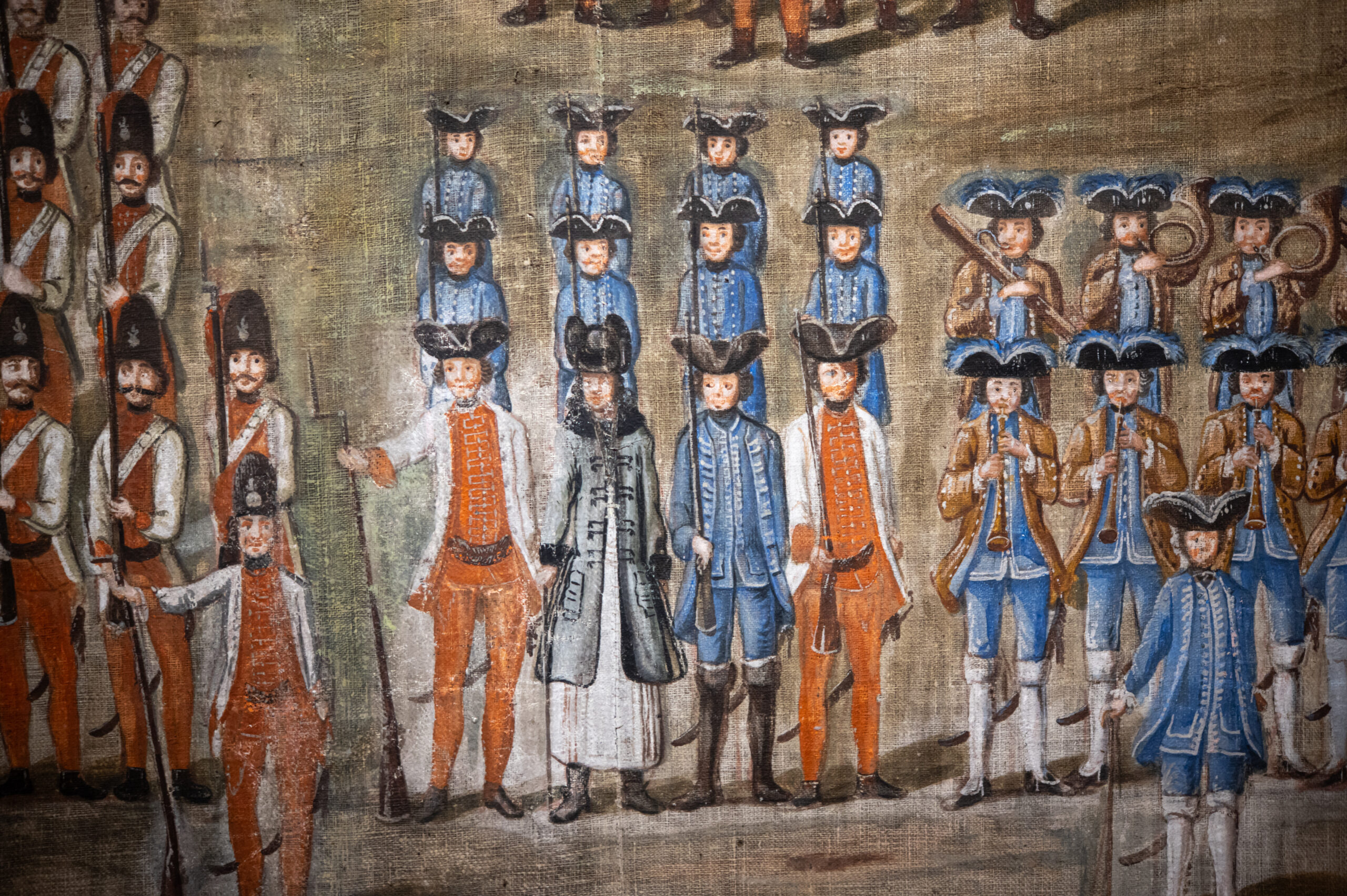
The rooms on the second floor are more simply furnished. They were used as bedrooms for visiting guests. The items are presented according to stylistic periods, from Baroque to Neo-Renaissance.
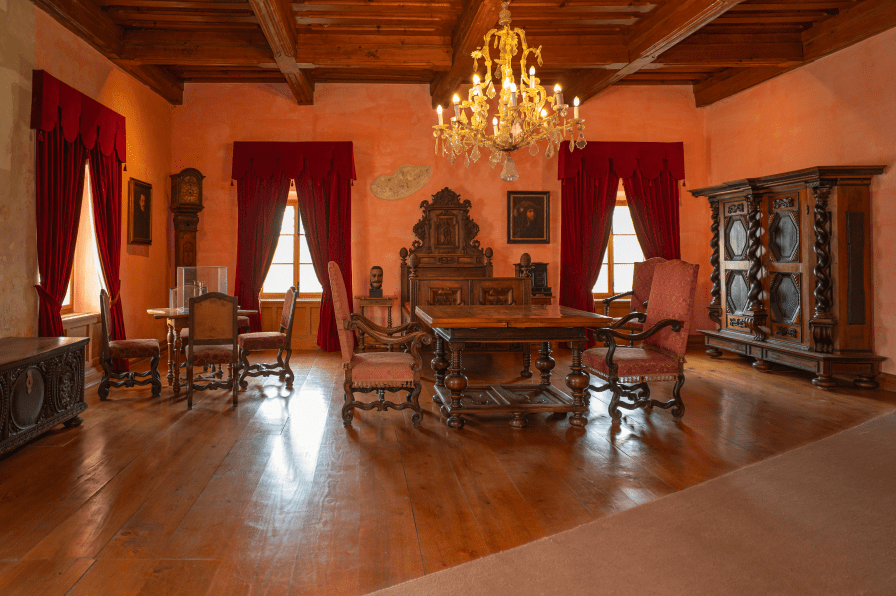
The room is furnished in the German Baroque style. The cabinet, bed, wardrobes and chests date from the 17th century, and the chairs are made according to French fashion. The tables are interesting: one is a folding table, while the other is a card table. The richly painted oval mirror and the 18th-century chandelier are especially notable. The Baroque room stands apart from the other rooms on this floor due to its old, preserved wooden doors, which are located on the outside of the room’s entrance. The doors feature relief-carved doorposts and a lintel with large carved letters and numbers “16 PB AS 39.” The numbers indicate the year 1639. The letters “PB AS” are abbreviations and are associated with the function of the room (presbyterium ara sacra – place of the sacred altar), as it probably served as a chapel in the 17th century.
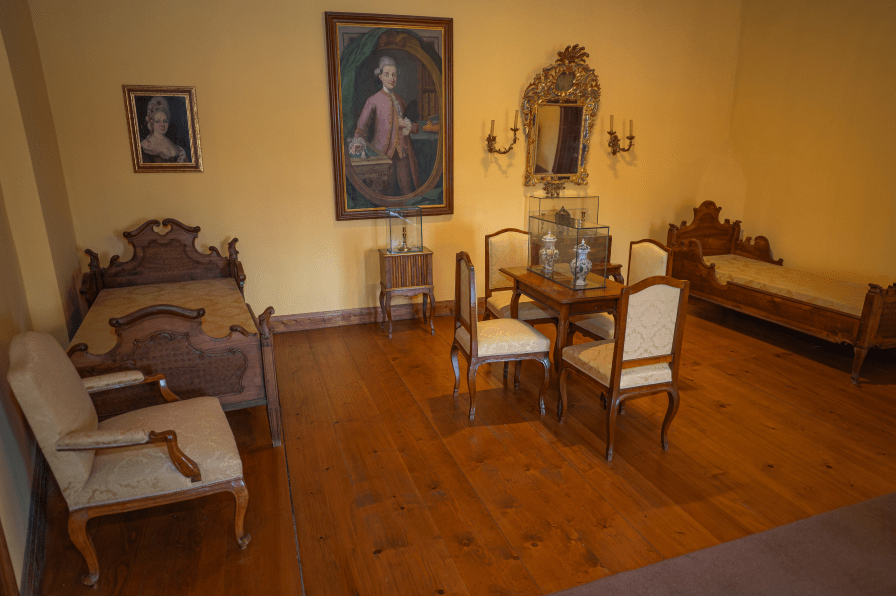
The Rococo room is presented in two parts, as a work area located on the left and a bedroom in the right part of the room. All the furnishings date from the second half of the 18th century. In the study area, there are two finely carved and decorated secretaires – writing desks with drawers and secret compartments. On the walls, displayed in oval frames, are family portraits created in the first half of the 18th century.
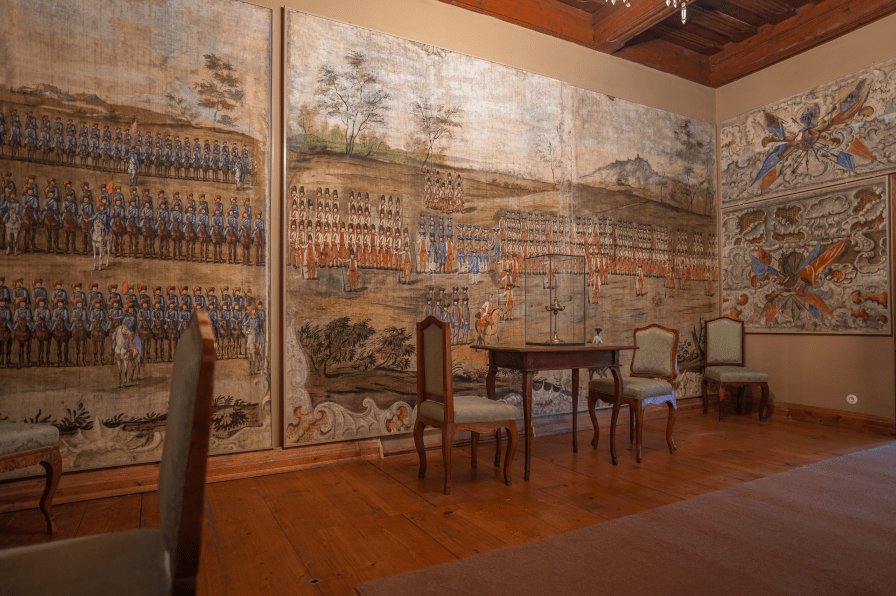
The painted canvas wallpapers in this room depict regular Austrian infantry and cavalry units from the period following the War of the Austrian Succession (1740-1748). Josip Kazimir Drašković was the commander of one of the units depicted here. The large wall painting consists of eight canvas panels painted with tempera, depicting units on parade, a total of 821 people. The paintings are very accurate because they depict the soldiers’ uniforms, equipment and flags, as well as the formation of individual units and their components, in detail. The small orchestra is particularly interesting, representing the first visual depiction of military music in Croatia.
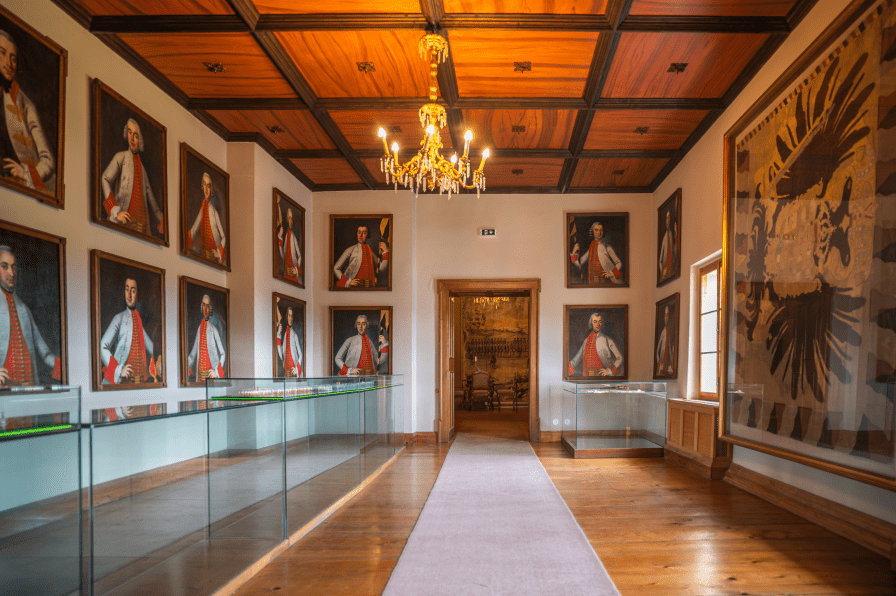
This room thematically continues from the previous one. Part of the gallery of 49 portraits of Josip Kazimir Drašković’s officers is on display here. The portraits are probably the work of Johann Michael Millitz and his school. All the officers are painted in similar, half-length poses with realistically depicted faces. Their similarity also stems from the uniformity of their hairstyles and military uniforms. Alongside the portraits of the military officers, two flags are also displayed here. The smaller swallow-tailed flag belonged to the cavalry, while the large flag with the imperial coat of arms was intended for the infantry.
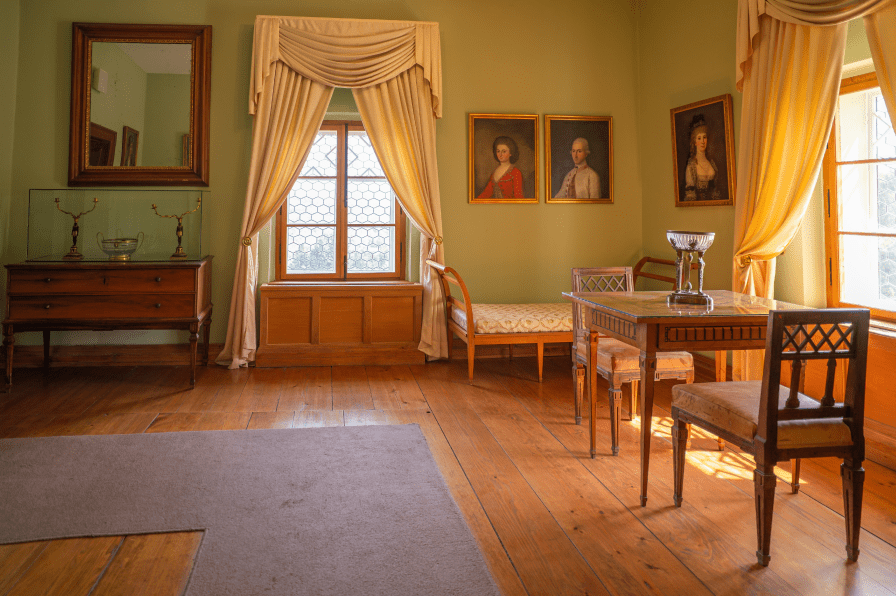
This room is furnished with items exhibiting the stylistic characteristics of Classicism (the transition from the 18th to the 19th century). It contains furniture suitable for everyday use. The space is further enhanced with two candlesticks from the Napoleonic era, created under a strong Egyptian influence. The paintings also display Classicist features and have well-preserved original frames. The portraits on the walls represent the most important members of the Drašković family from that period. Also here are portraits of Ivan VIII, founder of the first Masonic lodge in Croatia, and Juraj V, Janko’s younger brother.
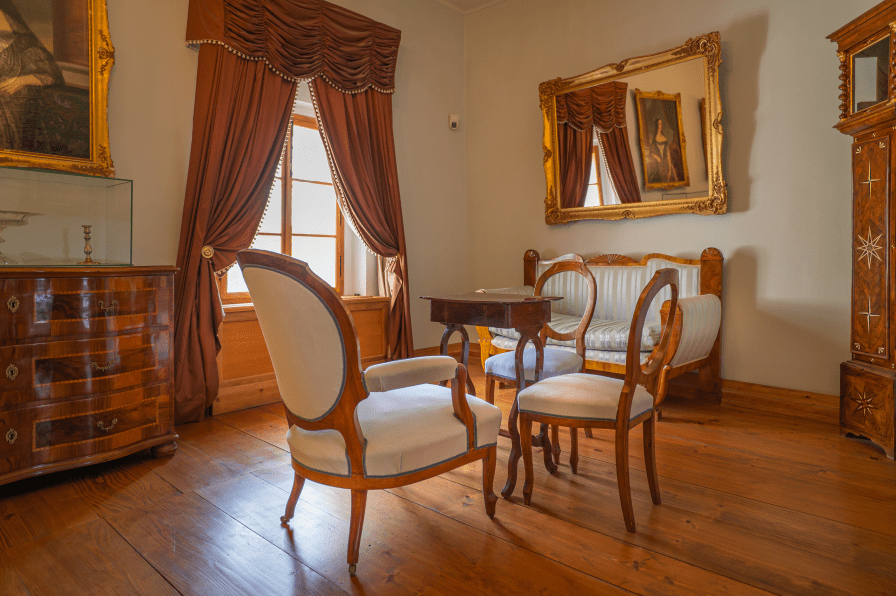
Following on from Classicism, Biedermeier was a stylistic period between 1815 and the mid-19th century. Furniture from this era is comfortable and functional and often polished, as can be seen in the example here at Trakošćan. On the partition wall, there is a lithograph depicting the imperial and royal Austrian family, along with a portrait of the deceased Emperor Francis I. In this room, there are interesting portraits characteristic of the Biedermeier style.
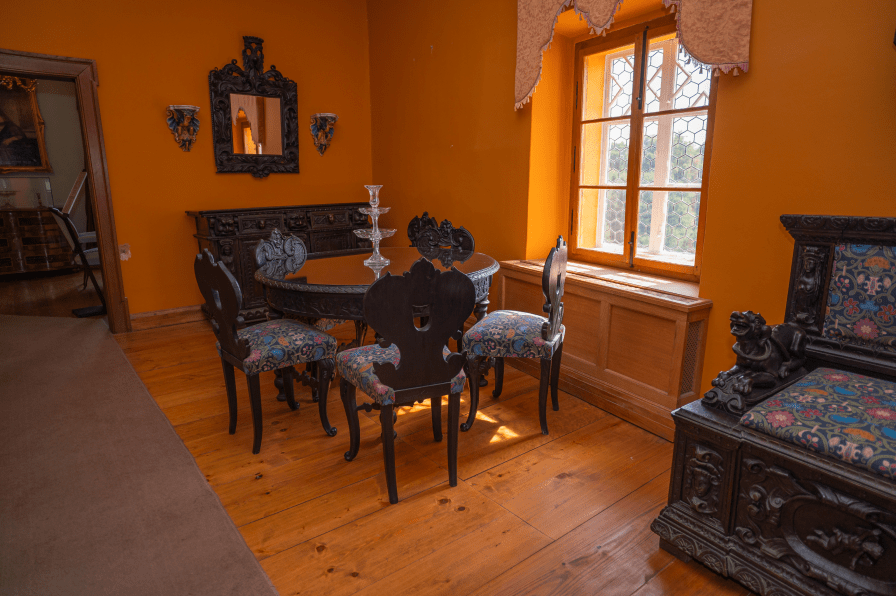
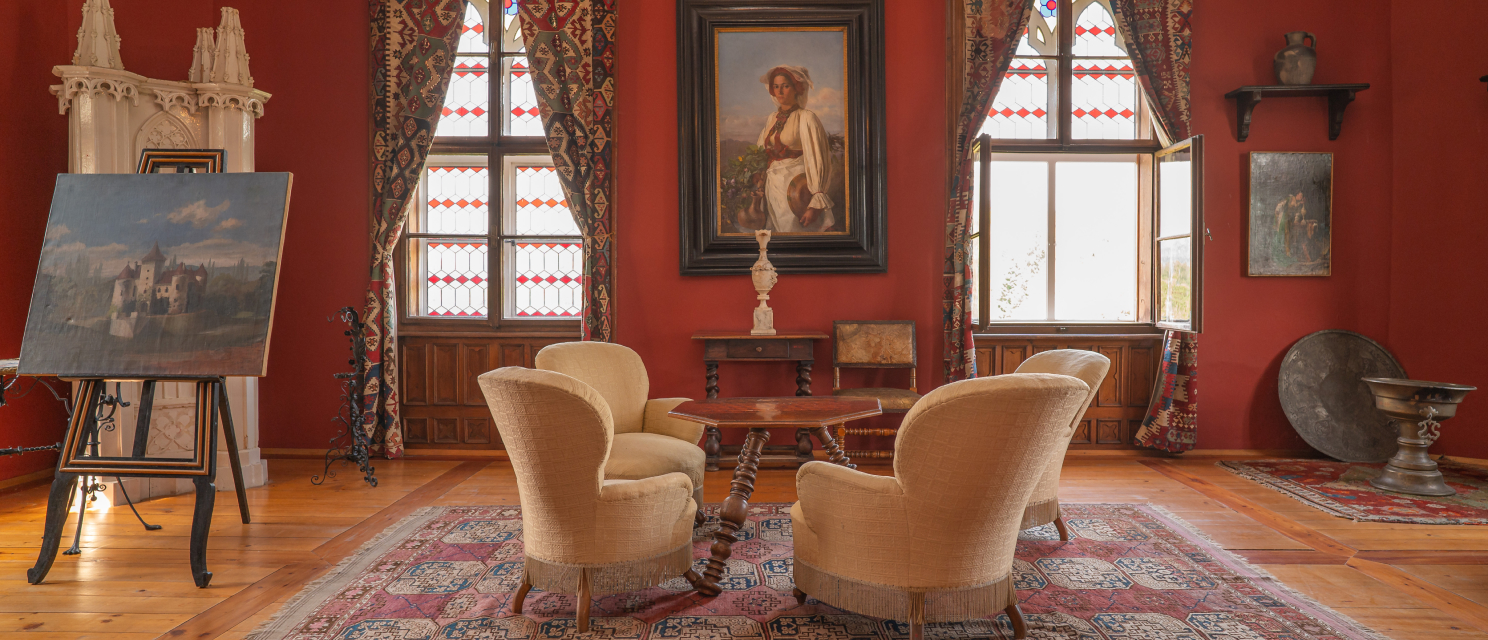
Neo-Renaissance is a form of Historicism that emerged in the second half of the 19th century. The pieces of furniture presented in this room are painted black, and some of the furnishings were part of the dowry of the painter, Julijana Erdödy. This room houses the oldest piece of furniture in the museum: an original chest of drawers from the Renaissance period. The room is adorned with one of the most beautiful portraits in the castle: a portrait of Klotilda Drašković, née Kulmer, wife of Franjo III Drašković.
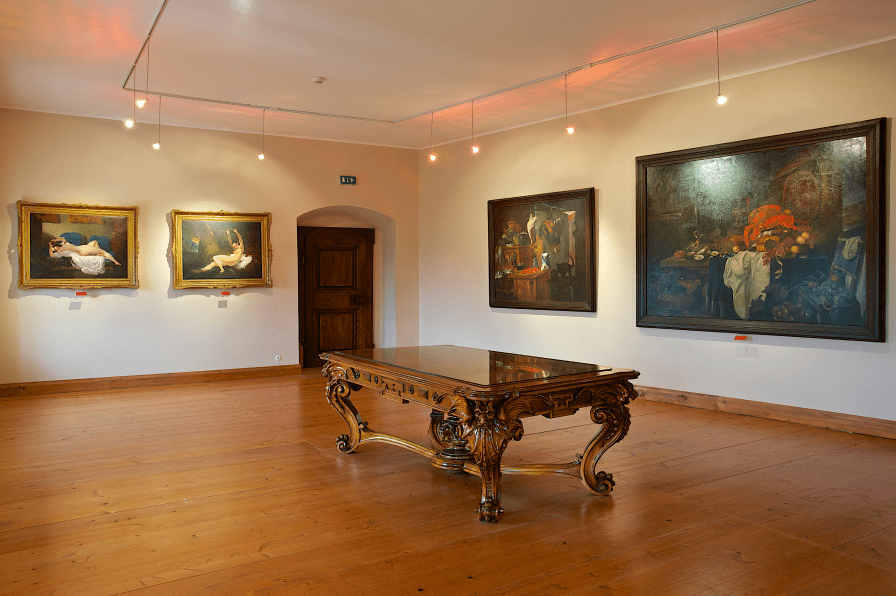
The gallery at Trakošćan Castle features four canvases by the renowned Biedermeier painter Mihael Stroy. These paintings form an allegorical cycle titled The Four Continents. The continents of Asia, Africa, Europe and America are depicted through the personifications of women placed within interior settings or landscapes. The paintings were created in 1836, and they clearly show the European perspective of exotic lands from distant continents, viewed through the lens of Romanticism.
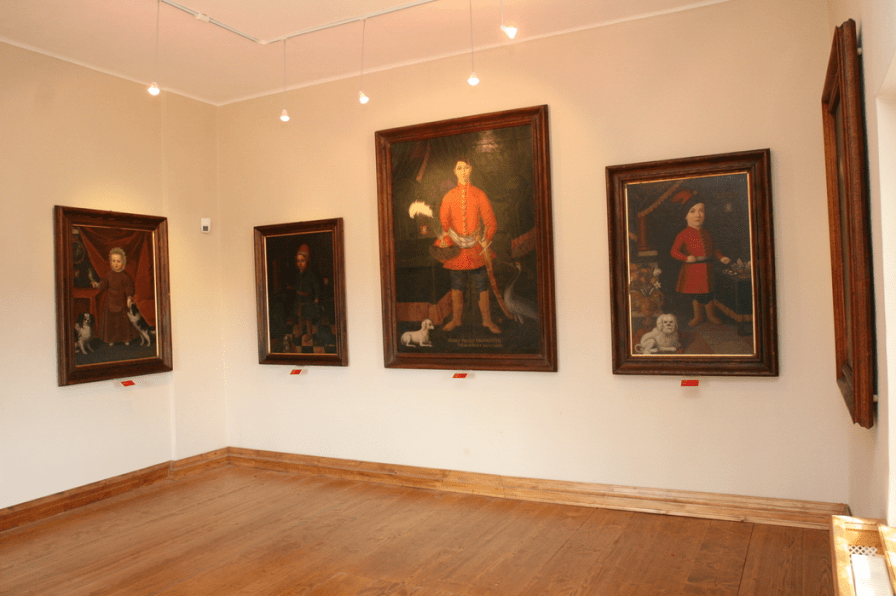
This smaller gallery displays portraits of child members of the Drašković family, dating from the late 16th to the mid-18th century, and they form a collection that is unique to the region of north-western Croatia. They are an extraordinary historical source for studying the everyday life, fashion, and accessories of the nobility of that era. The accompanying attributes, animals and plants depicted in the portraits indicate the high social standing and wealth of the family into which they were born.
Experience the Castle’s History
You can purchase entry tickets at the museum’s reception upon arrival.
Ticket prices