Experience the Castle’s History
Entry tickets
You can purchase entry tickets at the museum’s reception upon arrival.
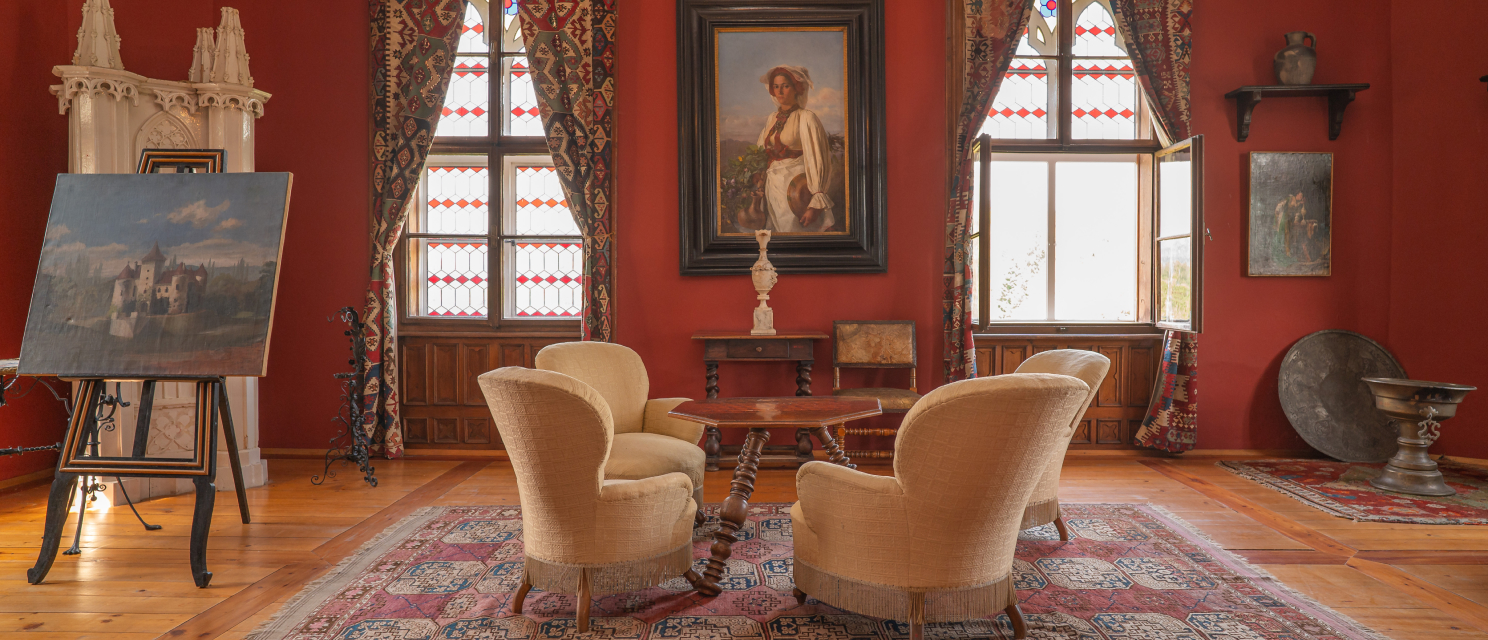
Ticket pricesThe upper ground floor consists of work, social and ceremonial spaces, and the interiors of these halls are characteristic of the elegant residential ambiences in the spirit of Historicism.
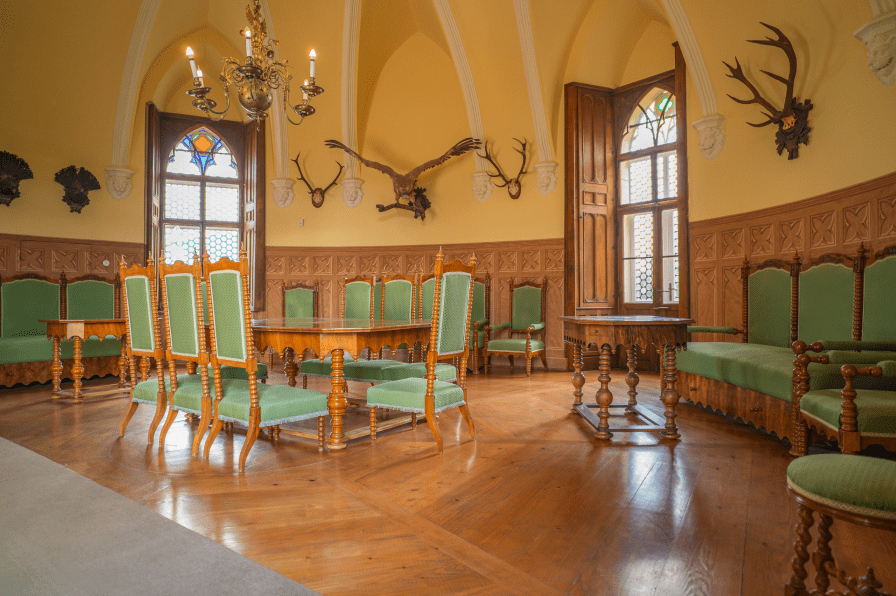
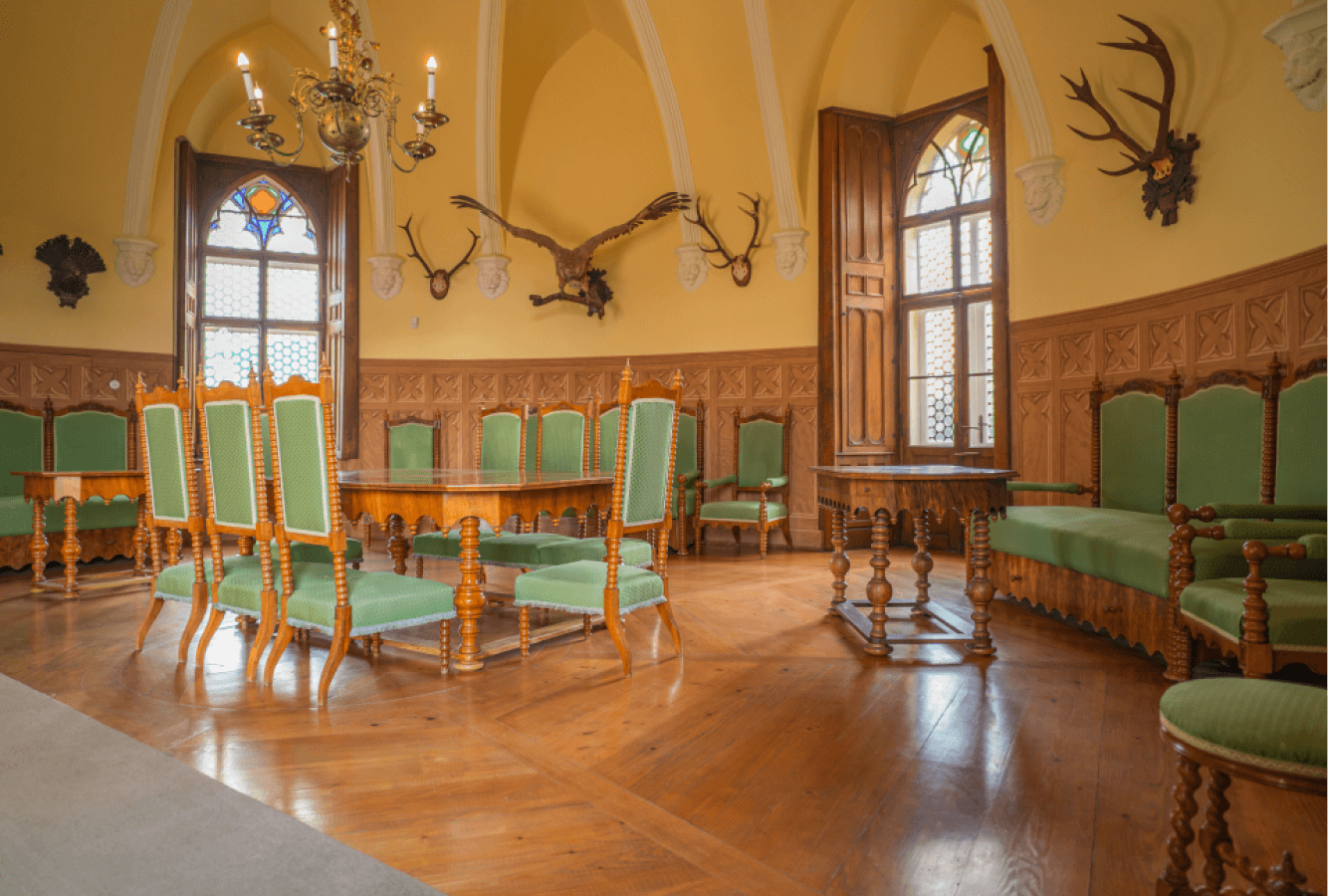
The hunting hall is located in the eastern tower of the castle and symbolically represents the hunting tradition of the Drašković family. Its separate location allowed the male company, most often after returning from hunting, to relax undisturbed and enjoy food and drink. It once used to serve as a large dining room.
The furniture is made of walnut wood and upholstered in green fabric, has neo-style characteristics and dates from the 1870s. It is sumptuously furnished and decorated with hunting trophies from the turn of the 19th to the 20th century. The hall is adorned with a large white tiled heater decorated with a relief with hunting motifs.
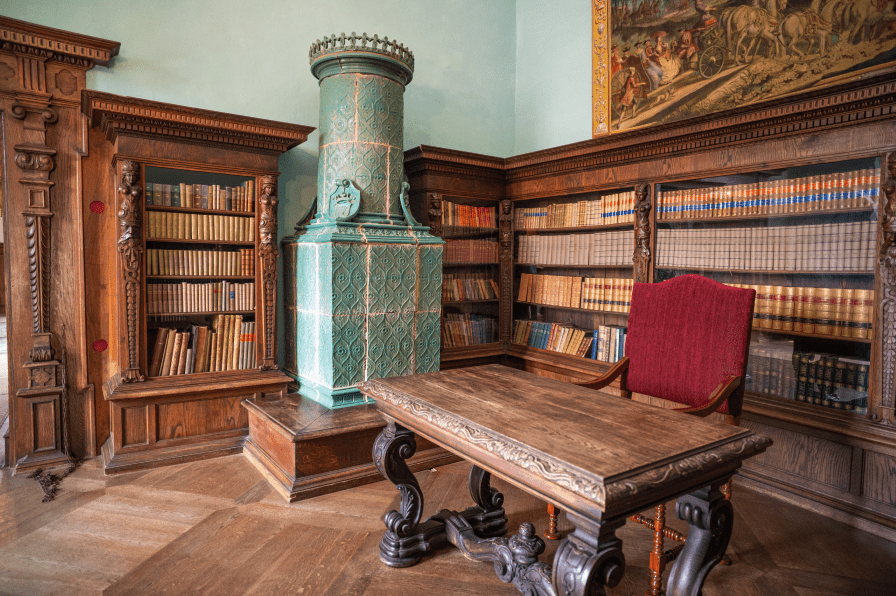
The castle owner’s study is furnished with Neo-Renaissance-style furniture and bookshelves. The entire castle library today holds around 1,700 books from the Drašković family legacy. Alongside fiction and encyclopaedic editions and periodicals, the collection also includes specialist manuals about hunting, cookery, sport, etc. The majority of the book collection dates from the 19th century, with only a smaller part dating from the 18th and early 20th centuries. Most of the books are written in German and French. A small archaeological collection is also on display, featuring polished axes from the Neolithic and Eneolithic periods, as well as clay pots from the Bronze Age.
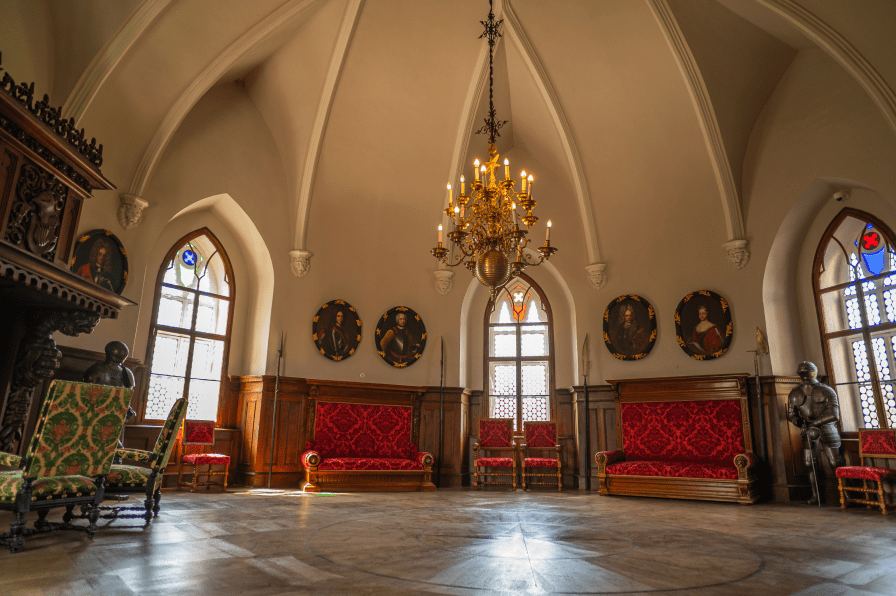
The knight’s hall is located in the western tower and is the most representative part of the castle. This ceremonial space, renovated in the 19th century, seeks to transport us back to the mediaeval romantic past and evoke chivalric virtues. Today, it symbolises the military history of Trakošćan and the Drašković family. The hall is furnished with Neo-Renaissance furniture and an open fireplace with a richly decorated wooden mantelpiece bearing the coats of arms of the Drašković and Latour families. In the centre of the room are two replicas of full-body knight’s armour dating from the 19th century. The walls of the knight’s hall are adorned with polearms from the late 16th and 17th centuries, as well as portraits of members of the imperial and royal Habsburg family and imperial generals in oval wooden frames decorated with gilded acanthus leaves. The centre of the hall is dominated by two sets of cavalry knight’s armour.
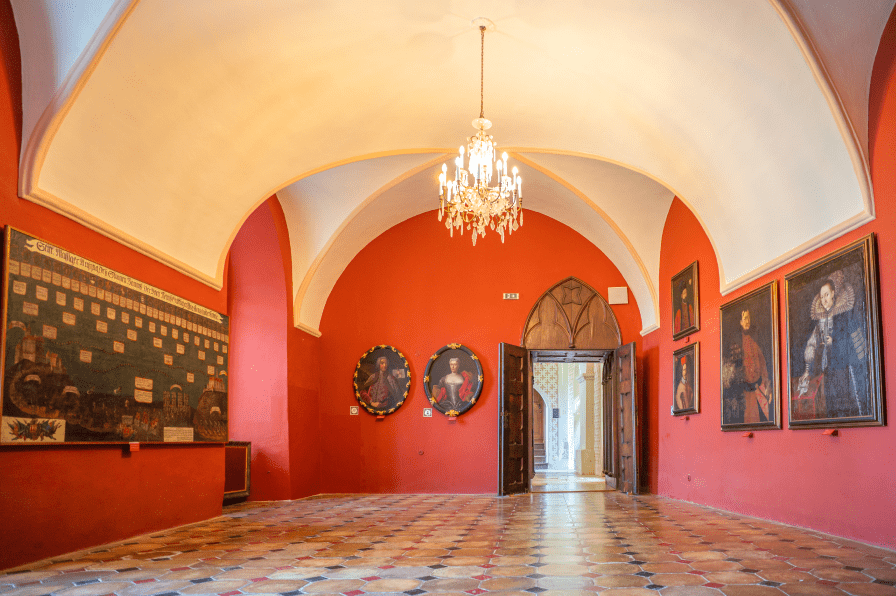
The portraits of the first members of the Drašković family are on display in the hall. Of particular note are the portraits of Juraj II, Gašpar, Ivan III, Nikola II and Ivan V. Drašković. An abridged genealogy of the Drašković family from 1755 is also on the wall here. The family tree shows only part of the family, namely only the direct ancestors of General Josip Kazimir Drašković, and it also provides us with interesting information about the appearance of the people of Trakošćan in the mid-18th century.
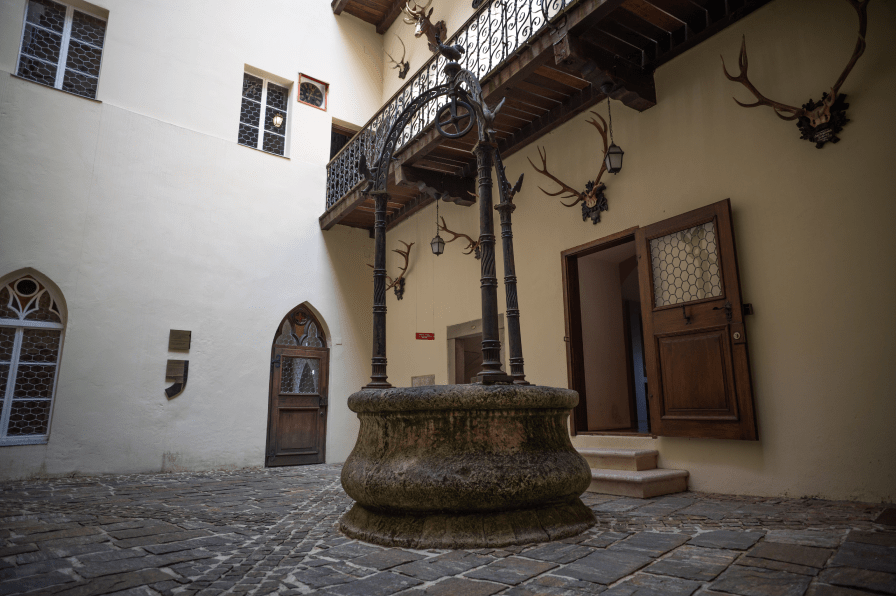
In the central part of the building, there is a quadrangular courtyard with a cistern, the lower stone part of which dates back to the 17th century, while the upper part made of cast iron was installed in the 19th century. In the Baroque period, two floors of the courtyard’s northern wall used to be open with double semicircular arcades, the remains of which are visible today inside. Balconies, hearths for heaters, and deer horn trophies extend across two levels through the eastern and southern walls. The courtyard wall also features a clock with a double dial, the work of the Varaždin watchmaker J. Bechel from the 19th century.
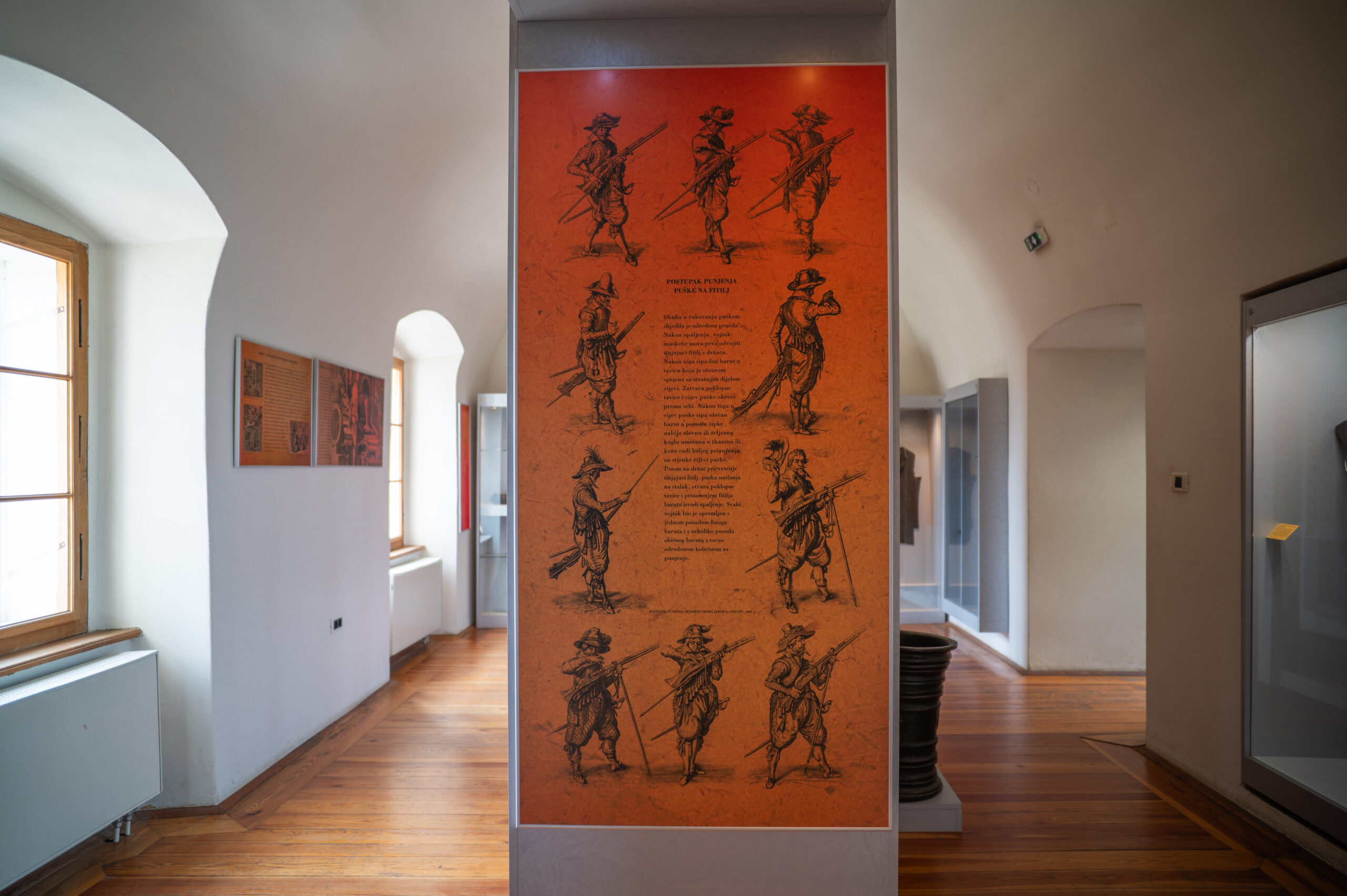
The Weapons Collection comprises around 300 examples of weapons and protective equipment, or their parts, dating from the 15th to the early 20th century. Today it is difficult to judge which pieces date back to the time when Trakošćan was a fortress and which were acquired later for court decoration. Nevertheless, the value of the collection is unquestionable, and in its content and typology, it traces the military past of the Drašković family.
Notable items in the collection include three German-made two-handed swords from the 16th century and a group of around twenty schiavona swords, one of the largest such collections in Croatia. The “hook guns”, as well as individual mortars and earlier cannons, could belong to the original defensive system of Trakošćan Fortress from the 15th and 16th centuries, just as helmets and parts of armour might be remnants of the original squad equipment of the Trakošćan garrison from the 17th century.
The cannons bearing the Drašković family coat of arms are linked to the Drašković family’s participation in battles against Napoleon, and French broadswords (pallos) could also date from this period as spoils of war. The group of polearms is exceptionally numerous (63 examples) and diverse – some examples were used as weapons in war, while others were status symbols for the bearers. We also presume that the group of hunting rifles could have been part of the original inventory of the Drašković family’s hunting equipment. Copies of two 16th-century-style armour were acquired as decoration to revive and evoke the chivalric past of the Drašković family and Trakošćan Castle.
The Weapons Collection presents 196 examples of weapons and equipment. The collection provides a historical overview of the development of cold and firearms and equipment from the 15th to the end of the 19th century.
Experience the Castle’s History
You can purchase entry tickets at the museum’s reception upon arrival.
Ticket prices